
People often ask us two questions:
Why does it take so long to train a service dog?
And why does it cost so much—especially if the dogs are placed for free?
They’re fair questions. From the outside, it can look like a well-trained dog simply needs obedience, good manners, and a vest.
But a service dog isn’t trained for convenience.
They’re trained to assist a person’s life.
Training Is a Journey, Not a Checklist
Service dog training doesn’t happen in controlled environments. It happens in the real world—grocery stores, sidewalks, parking lots, medical offices, and crowded public spaces full of noise, food, movement, and unpredictability.
Training unfolds gradually, layering skills over time:
- Calm focus in busy environments
- Reliable responses under distraction
- Emotional steadiness when routines change
- Confidence without reactivity
Organizations like Assistance Dogs International establish minimum standards for service dog training and public access. At Putnam Service Dogs, we train far beyond those baselines—because real life rarely sticks to the minimum.
You can read more about baseline requirements in our guide to minimum standards for service dog training.
It’s Not Just Dog Training, It’s a Partnership
Every service dog placement is a partnership between the dog and their person.
While the dog is learning how to perform disability-related tasks and behave safely in public, their person is learning:
- How to communicate clearly and consistently
- How to read their dog’s body language
- How to reinforce calm, focused behavior
- How to build trust and confidence together
This relationship can’t be rushed. A dog may understand a task—but performing it reliably, calmly, and safely for their person takes time, repetition, and bond-building.
What Our Service Dogs Are Trained to Do
Each Putnam Service Dog is uniquely trained based on the needs of their matched person through our service dog training programs.
Our dogs are trained to:
- Walk beside their person on a loose leash—no pulling or lunging
- Assist with balance and mobility, including stairs
- Retrieve dropped or requested items
- Open drawers and doors
- Alert to sounds and changes in the environment
- Sweep an area or create space in public
- Provide grounding, soothing, or protective positioning
We train service dogs for:
- People with physical disabilities (other than blindness), with a focus on mobility assistance and hearing alert dogs
- Veterans with PTSD
To ensure long-term success, we seek applicants who live within four hours driving distance of Brewster, NY, allowing for hands-on training, placement, and follow-up support.
The Training Journey: From Rescue Pup to Service Dog
While no two dogs follow the exact same path, most Putnam Service Dogs move through these stages:
Selection & Early Foundations
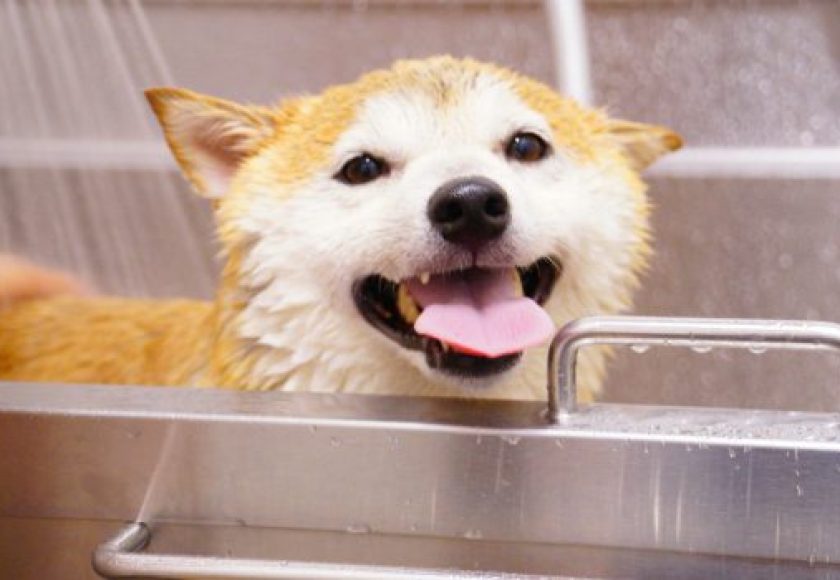
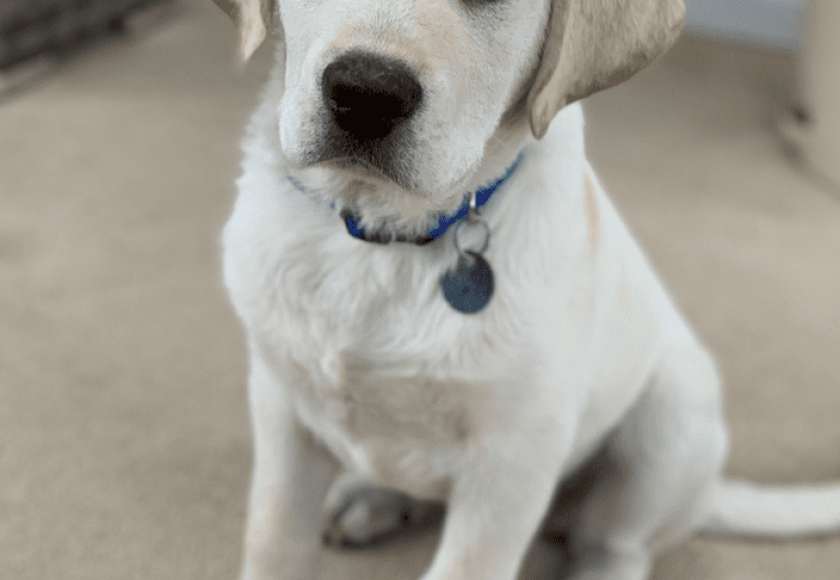
Carefully selected mixed-breed pups from rescue organizations are evaluated for temperament, confidence, and readiness.
Core Training & Public Exposure
Dogs learn obedience, emotional regulation, and calm behavior in real-world environments.
Advanced Skills & Task Training
Training becomes individualized, focusing on the specific assistance tasks a future person may need.
Matching & Bond Building
We introduce graduating dogs to potential recipients and look for natural chemistry—matching pace, loose leash walking, and mutual happiness and comfort being together.
Placement & Ongoing Support
The dog and their person train together, supported by our team to ensure a smooth transition into daily life.
From start to finish, this journey averages 2,000 hours of training over two years.
Why Training Costs What It Does—So Dogs Can Be Free
Our service dogs are placed at no cost to their person.
That’s intentional and only possible because training is done right.
The true cost of training includes:
- Professional trainers with specialized expertise
- Thousands of hours of hands-on instruction and evaluation
- Individualized task training
- Public access preparation
- Ongoing education and support for the dog’s person
- The care of the dog, which includes its food, veterinary care, supplies and toys
Every dollar invested protects:
- The safety of the person
- The safety of the public
- The well-being of the dog
- The integrity of the dog having service dog access
Donor support is what makes it possible to train thoroughly and place dogs for free. Join us in supporting the training journey from rescue to placement.
The Reality of Demand and Matching
Unfortunately, the demand for service dogs is stronger than we can meet.
Our resources—donations, suitable dogs, and volunteer puppy raisers—limit how many service dogs we can train at a time.
Who receives a graduating dog depends on:
- The needs of the applicant
- Their home environment and lifestyle
- Their ability to care for a dog
- And most importantly, the connection between the dog and that person
When a dog meets a potential recipient, we look for immediate chemistry. In the end, the dog is the ultimate decision-maker. If they don’t like the person, it’s not a match.
Important Notes About Our Program
- We do not train hypoallergenic dogs
- We do not train people’s personal pet dogs
- We do not provide diabetic, seizure alert, psychiatric, emotional support, or dogs you can brace on to get up from a fall.
If you’re seeking one of those, please contact us, and we’ll recommend other reputable organizations.
Applying for a Service Dog
Applying does not guarantee placement.
All required fields must be completed, and any misrepresentation will result in disqualification. Our goal is to ensure the best possible outcome—for the dog and for their person.
If you believe Putnam Service Dogs may be the right fit, you can apply for a service dog to begin the process.
Why This Matters
Every Putnam Service Dog represents years of training, trust, and care from many people – paid staff, volunteers, and the veterinarians who care for our dogs—long before placement day arrives.
When you support Putnam Service Dogs, you’re not funding a shortcut.
You’re making it possible to train exceptional dogs and place them free of charge with the people who rely on them every day. You’re helping someone who is living a challenging, difficult life before Putnam Service Dogs – both the rescue dog, and their person.
That’s what supporting Putnam Service Dogs makes possible.
FAQs: Service Dog Training
Service dog training takes years because dogs must perform reliably in real-world environments, under stress and distraction, while forming a strong working partnership with their person. This requires many repetitions of any task in many varied environments. At Putnam Service Dogs, training averages 2,000 hours over two years to ensure safety, consistency, and long-term success.
Putnam Service Dogs places service dogs at no cost to their recipients because access to independence should not depend on fundraising ability or having a sizeable nest egg. We do screen each applicant to ensure they can care for the dog competently and humanely. This includes covering the maintenance costs of the dog (which average a minimum of $1,500/yr). There is not public money (government funds) currently to help cover the costs of training a service dog. Our Donors, along with grants we receive, support the extensive training, professional expertise, and long-term preparation required to train each dog properly.
Service dog training includes obedience, public access behavior, individualized task training, real-world exposure, matching, and ongoing support for both the dog and their person. Training focuses on reliability, calm behavior, and safety in everyday environments.
Service dogs are matched based on the applicant’s needs, home environment, and ability to care for a dog. When a dog meets a potential recipient, trainers look for natural chemistry. Ultimately, our dog plays the key role in choosing their person.
Demand for service dogs exceeds available resources. Training requires significant funding, qualified dogs, and volunteer puppy raisers. Despite our care in selecting dogs to train, close to 50% show they’re not capable of being a service dog during their training. Putnam Service Dogs prioritizes quality and ethical training, which also limits the number of dogs trained each year.
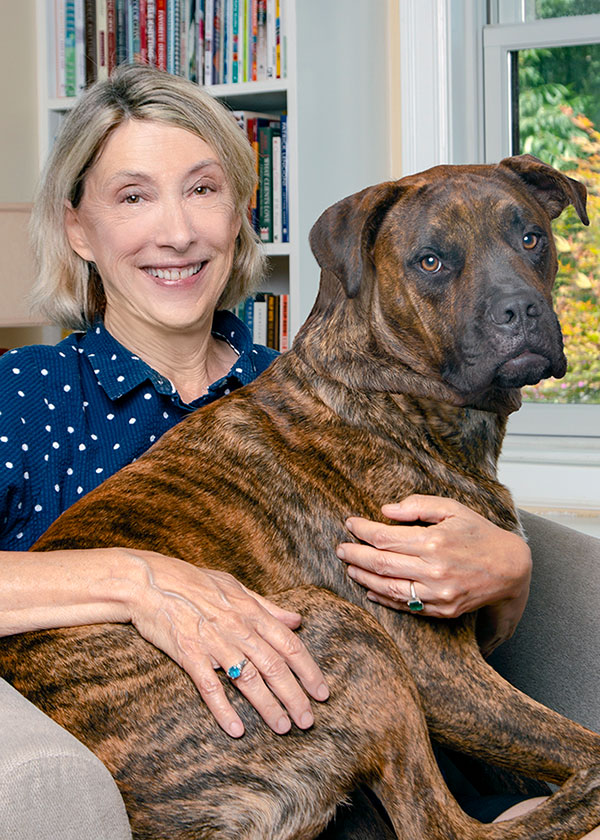
Nancy Teague, the founder of Putnam Service Dogs, is a dedicated advocate who embodies the mission of the organization every single day. Alongside the passionate individuals who have joined the cause, she works tirelessly to make a difference in the lives of both people and dogs. With an unwavering commitment to championing service dogs, Nancy understands the transformative power that occurs when a service dog is matched with its recipient, forging a remarkable team.