
A service dog is individually trained to perform specific tasks that help a person manage their disability. These tasks increase independence, improve safety, and reduce daily barriers.
If you’re asking, “What does a service dog do?” you’re likely looking for something practical.
At Putnam Service Dogs, we train service dogs for people with physical disabilities (other than blindness) and Veterans living with PTSD. We do not train therapy dogs or emotional support dogs, and understanding the differences between a service dog vs. emotional support dogs and therapy dogs protects the integrity of this work.
What Does a Service Dog Actually Do?
A service dog performs trained, disability-related tasks such as:
- Retrieving dropped items
- Opening and closing doors
- Turning lights on and off
- Providing balance or mobility support
- Interrupting panic attacks
- Waking a Veteran from night terrors
- Creating physical space in crowded environments
- Bringing medication or emergency items
These are not tricks. They are purposeful, trained responses that directly mitigate the handler’s disability.
If you’d like to explore more detailed examples, you can review a full list of service dog tasks.
What Those Tasks Mean in Everyday Life
A service dog retrieving a dropped item prevents repeated physical strain.
Balance support restores confidence in movement.
A trained PTSD interruption can stop anxiety from escalating into something overwhelming.
The task itself is technical.
The impact is human.
A service dog does not “fix” a disability. What they do is reduce the barriers that make daily life harder. They create predictability, stability, and safety—and over time, that consistency builds independence. Their steady companionship is a lifeline to their people.
Service Dogs Are Always Working
Even when lying quietly under a table, a service dog is not simply resting.
They are aware of their person’s breathing.
They notice changes in posture.
They monitor the surrounding environment.
They are trained not just to react, but to anticipate.
That anticipation can be the difference between calm and escalation, between risk and stability.
And that level of reliability takes time.
The Discipline Behind the Work
Service dogs typically complete 18 to 24 months of structured training. That process includes early socialization, advanced task development, public access preparation, and continuous evaluation.
You can learn more about how Putnam Service Dogs trains its dogs through our humane, structured approach.
Not every dog graduates.
And that matters.
Maintaining high standards ensures that every placed dog is fully prepared for the responsibility of service work. Protecting that standard protects the people who depend on it.
No service dog placed wears a Putnam Service Dogs’ vest until they’ve passed the Assistance Dogs International (ADI) Public Access test. ADI is the standard setting organization of the service dog industry. The Public Access Test is a list of tasks the service dog team must perform successfully. For example, get the dog safely out of the car in a busy parking lot, go into a busy venue and drop the leash and the dog retrieves it for their person, the dog calmly ignores active kids or other dogs, etc.
What You Don’t See
You don’t see is the volunteer puppy raiser bringing that young dog into busy stores week after week, patiently building confidence. (If you’ve ever considered it, you can learn what it means to become a puppy raiser.)
You don’t see the careful matching process that pairs the right dog with the right person.
And you don’t always see the shift that happens at home.
The Veteran who finally sleeps through the night.
The parent who feels less alone.
The sibling who notices a calmer household.
When we say we lift up two lives, we often mean more than that.
Why the Definition Matters
When people ask what a service dog does, the answer is not simply “provide comfort.”
Comfort may be present — but it is not the defining feature.
A service dog performs trained, disability-specific tasks. That distinction matters legally, ethically, and practically. When definitions blur, public trust erodes and access becomes harder for those who rely on these partnerships every day.
Protecting the integrity of service dog work protects independence and dignity.
A Working Partnership, Made Possible by Community
At Putnam Service Dogs, we see a service dog as a disciplined partnership.
A highly trained dog working alongside a human every day to increase access, restore confidence, and create greater freedom of movement.
That work is intentional.
It is structured.
It is steady.
It is consistent and reliable
And it is made possible by a community of volunteers, trainers, and donors who support the journey from puppy to placement.
If you believe in protecting independence and dignity, you can support the training of a future service dog and help lift up the next partnership.
FAQs: Service Dogs
A service dog continuously monitors their handler’s environment and condition. Beyond performing specific trained tasks, they anticipate needs, respond to changes, and provide consistent, reliable assistance throughout the day.
Service dogs do have some down time every day, but will rise from a nap if requested by their person. Even when lying quietly, a service dog remains attentive to their handler. Their role requires focus, discipline, and readiness to perform trained tasks when needed.
No. Responsible programs evaluate temperament, health, and performance throughout training. Asking a dog to become a service dog is asking a lot! Not all dogs are capable of it. Dogs who are not suited for service work are carefully placed in loving homes.
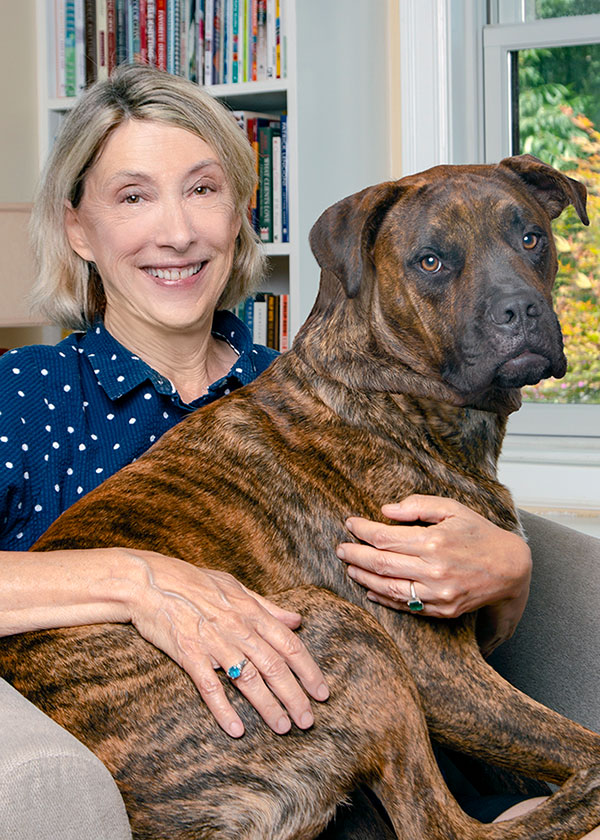
Nancy Teague, the founder of Putnam Service Dogs, is a dedicated advocate who embodies the mission of the organization every single day. Alongside the passionate individuals who have joined the cause, she works tirelessly to make a difference in the lives of both people and dogs. With an unwavering commitment to championing service dogs, Nancy understands the transformative power that occurs when a service dog is matched with its recipient, forging a remarkable team.

