
You’re in the grocery store, and there it is: a dog walking calmly at someone’s side, focused, wearing a vest. Every part of you wants to say hello. We understand completely—we love these dogs more than anyone. But that dog is on the job, and how you act in the next few seconds genuinely matters to the person beside it.
A service dog isn’t a pet out for a walk. It’s a working partner trained to keep someone safe and independent—retrieving a dropped item, bracing a person as they stand, interrupting a panic spiral, or alerting to a medical event before it happens. A friendly distraction at the wrong moment can pull the dog away from a job that someone’s well-being depends on.
Service dog etiquette isn’t complicated, and it isn’t about being cold. It’s about respect—for the dog, and for the person it works with. Here are the seven rules everyone should know.
First, what counts as a service dog?
Under the Americans with Disabilities Act (ADA), a service dog is a dog individually trained to do work or perform tasks directly related to a person’s disability. That’s the legal definition—and the practical one. The dog has a job.
That’s different from an emotional support animal, which provides comfort through companionship but isn’t trained to perform specific tasks. Emotional support animals are not service dogs under the ADA. Throughout this guide, when we say service dog, we mean a trained working dog and the person it serves—what we call a team.
The golden rule of service dog etiquette: A working dog is not public property and not public entertainment. Give the team the same easy, ordinary respect you’d give any two people moving through their day.
The 7 Rules
1. Don’t pet the dog—even when every instinct says to
This is the big one, and it’s the question we hear most: can you pet a service dog? The honest answer is usually no—not without asking, and often not at all.
A service dog reads its person constantly. It may be moments away from alerting to a drop in blood sugar, an oncoming seizure, or a rising wave of anxiety. A pat on the head breaks that focus. In that window of distraction, the dog can miss the very signal it was trained to catch—and that’s not a missed trick, it’s a missed job that someone counts on.
Do this instead: Admire from a distance and keep your hands to yourself. If you truly want to interact, ask the person—not the dog—and accept a “no” gracefully. Many people will say no simply because their dog is working, and that’s not rudeness. It’s the dog doing exactly what it should.
2. Don’t try to get the dog’s attention
Petting isn’t the only distraction. Kissing noises, whistling, waving, barking back at it, calling “here puppy,” or locking eyes and holding the gaze can all pull a working dog off task. Dogs are trained to notice these cues—that’s the point—so even a well-meant “who’s a good boy?” lands as an interruption.
Do this instead: Let the dog be invisible. No sounds, no eye contact, no trying to make friends. The best compliment you can pay a working dog is to let it work.
3. Never offer food
Food is the single most powerful distraction there is—and for a service dog, it can be more than a distraction. These dogs are trained to never eat food off the floor, and that training exists for good reason. A service dog spends time in restaurants and other public spaces, and it can’t be hoovering up crumbs the moment it gets a chance. More seriously, a dog that grabs whatever lands on the floor could swallow a pill its person accidentally drops—a genuine danger.
So when you offer a treat “just this once,” you’re not being generous—you’re chipping away at a carefully built habit that keeps the dog safe and its person protected. A single dropped crumb can teach a working dog to start scanning the floor instead of watching its person.
Do this instead: Never feed a service dog, and don’t let your kids slip it a snack under the table. If you’re eating nearby, keep food to yourself and your space—and resist the urge to “share.”
4. Talk to the person, not the dog
It’s a small habit with a big meaning. When people meet a team, they often greet the dog first and barely acknowledge the human. But the person isn’t an accessory to the dog—the dog is there to support the person. Leading with the dog, however affectionately, can quietly reduce someone to “the one with the cute dog.”
Do this instead: Greet and speak to the person the way you would anyone else. If the dog comes up naturally in conversation, follow the person’s lead. Their dignity comes first—always.
5. Give the team space—keep your own dog and kids back
Another animal is one of the hardest distractions for a working dog to ignore. From the very start of training, our pups learn that they don’t say hello to other dogs while they’re on leash and working—it’s far easier to prevent that habit than to untrain it later.
Here’s why it matters so much. A large dog that expects to greet every dog it passes is a dog whose focus has drifted away from its person. Worse, an eager lunge toward your friendly dog can physically pull its person off balance—and if that person’s stability is already fragile, a split-second tug can put their safety at real risk. The same goes for excited children who want to hug or chase the dog.
Do this instead: Don’t assume the service dog can simply “handle” the greeting, and never send your own dog over to say hi. Put real distance between your dog—and your kids—and the working team as you pass. And take a moment to teach the children in your life the same rule you’re learning here:
Teaching kids: “That dog is working. It has a very important job helping its person, so we don’t pet it, call it, or feed it. We can wave hello to the person instead.” Kids understand “the dog is at work” faster than adults do.
6. Don’t demand “proof” or pepper the team with questions
You don’t need to play gatekeeper, and you’re not entitled to someone’s medical story. The ADA does not require service dogs to wear special vests, carry ID, or show certification papers. In fact, when it’s not obvious what a dog does, the law allows a business to ask only two questions:
- Is the dog a service animal required because of a disability?
- What work or task has the dog been trained to perform?
That’s it. No one may ask about the person’s disability, demand documentation, or require the dog to demonstrate its task. As a fellow member of the public, you have even less reason to interrogate anyone—so don’t.
Do this instead: Assume good faith and move on with your day. The person navigating the world with a service dog has already earned it the hard way.
7. If a working dog approaches you on its own, its person may need help
Here’s the exception that proves the rule. A trained service dog won’t normally leave its person to come to a stranger. So if a service dog breaks away, nudges you, or seems insistent on getting your attention, don’t shoo it off—it may have been trained to seek help during an emergency.
Do this instead: Follow the dog. Its person could be having a medical episode and need assistance. In that moment, the dog isn’t being friendly—it’s finishing its job
Why This Respect Matters
Behind every calm, focused dog in a vest is an extraordinary amount of work—and a person reclaiming their independence. At Putnam Service Dogs, each dog represents roughly 2,000 hours of training before it’s ever matched with the person it will serve.
Our dogs come from shelters. We carefully select rescue dogs for their potential, raise them in homes, and train them to become dependable partners for veterans with PTSD and individuals with physical disabilities. Every dog is placed at no cost to the person who receives it. When you give a working team space and respect in public, you’re protecting exactly the kind of independence and dignity all of that training is built to restore.
Good etiquette is something everyone can practice. Share these seven rules with your family, your coworkers, your school, or your team, and use se these simple words, “Can I pet your dog?”, and don’t be surprised or disappointed if you’re told “Sorry, he’s working now.”
Be the Reason a Working Team Exists
Every Putnam service dog is rescued, trained, and placed at no cost—because our community makes it possible. Your support funds the training hours, the veterinary care, and the careful matching that turn a shelter dog into someone’s independence.
If you love what service dogs do, and who they are, consider donating today.
Frequently Asked Questions
Can you pet a service dog?
Usually not. A service dog is working, and petting distracts it from tasks its person depends on. Some people may allow a quick greeting, but you must ask the person first—and a "no" is normal and should be respected.
Why can't you pet a service dog?
Because petting pulls the dog's focus off its person. A working dog may be moments from alerting to a seizure, a blood-sugar drop, or an anxiety spike. A friendly distraction at the wrong moment can cause it to miss a job that affects someone's safety.
What two questions can a business ask about a service dog?
When it isn't obvious what the dog does, staff may ask only: (1) Is the dog a service animal required because of a disability? and (2) What work or task has the dog been trained to perform? They cannot ask about the disability itself, demand proof, or require a demonstration.
What should I do if a service dog approaches me without its person?
Take it seriously. A trained service dog won't usually leave its person, so if one comes to you insistently, it may have been trained to seek help during an emergency. Follow the dog—its person may need assistance.
Is it okay to take a photo of a service dog?
Ask first, and respect a "no." Photographing a working team without permission is intrusive, and stopping to take pictures can distract the dog. Treat the team the way you'd want to be treated in public.
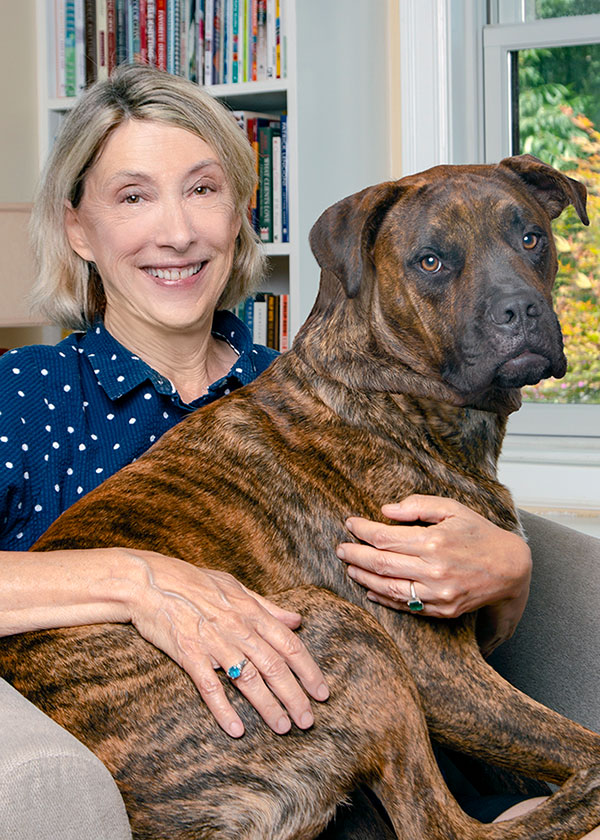
Nancy Teague, the founder of Putnam Service Dogs, is a dedicated advocate who embodies the mission of the organization every single day. Alongside the passionate individuals who have joined the cause, she works tirelessly to make a difference in the lives of both people and dogs. With an unwavering commitment to championing service dogs, Nancy understands the transformative power that occurs when a service dog is matched with its recipient, forging a remarkable team.