

To potty train a puppy, take them to the same spot on a consistent schedule — first thing in the morning, after every meal, nap, and play session, and right before bed — then reward them the instant they finish outside. You can praise them during the act of eliminating (capturing the cue) with a “Good boy” or “Good girl” and a smile.
Supervise closely, use a crate when you cannot watch, and clean any accidents with an enzymatic cleaner. Most puppies are reliably house-trained by four to six months of age. Your consistency, reliability, and strong approval are key to their success and learning this behavior.
If you have just brought home a new puppy, let me be the first to say congratulations — and to promise you that the puddle on your kitchen floor is not a sign of things to come. Potty training is almost always the very first thing you and your new pup work on together, and after all my years of doing this, I can tell you it is far more about consistency than talent.
I founded Putnam Service Dogs in 2016, and house training is step one of the roughly 2,000 hours of training every one of our carefully selected rescue dogs goes through before they are placed.
We have taught this skill many times over, and the approach I am going to walk you through is the same steady, patient one my team uses with every new pup we adopt.. It works. Let me show you.
How long does it take to potty train a puppy?
Most puppies are reliably house-trained between four and six months of age, though every dog is different, and smaller dogs sometimes take longer because a smaller body means a smaller bladder. Rather than watching for a finish line, string together good days — a week with no accidents tells you more about your progress than any single milestone.
Here is a rule of thumb I give everyone for how long a puppy can physically hold it: their age in months, plus one, in hours. A two-month-old can wait about three hours; a four-month-old, about five. If a young puppy has an accident after being asked to wait all day, that is on the schedule, not the dog. This is the maximum time for them to wait. Your success will increase if you reliably take them out sooner than these time periods.
What you will want before you start
You do not need much to house-train a puppy — a crate, high-value treats, an enzymatic cleaner, and a leash cover the essentials:
- An appropriately sized crate. A crate is one of the most effective house-training tools there is, because a puppy naturally avoids soiling where they sleep. For how to introduce one kindly, see my guide to crate training your puppy.
- High-value treats kept right by the door, so you grab one to reward the very instant your pup finishes outside.
- An enzymatic cleaner — not an ordinary household cleaner — for the accidents that will happen. I will explain why below.
- A leash, so a trip to the potty spot stays focused and short rather than turning into playtime. Plant your feet and show your pup you’re serious, not playing.

15pages
Free guide
New Pup Starter Checklist
Everything to do in your first thirty days together, whether your pup is eight weeks old or eight years old and just came home from a shelter.
Where should we send it?
We will email it to you right away.
By submitting this form, you are consenting to receive marketing emails from: . You can revoke your consent to receive emails at any time by using the SafeUnsubscribe® link, found at the bottom of every email. Emails are serviced by Constant Contact
The heart of it: build a routine your puppy can count on
The core method is five simple habits: put your puppy on a schedule, use one potty spot, go out often, reward immediately, and supervise closely. Here is how each one works.
1. Put your puppy on a schedule
Feed at the same times every day — what goes in on a schedule comes out on a schedule. Then build your potty trips around the moments you can predict: first thing in the morning, after every meal, after naps, after play, and right before bed. To start, at least every 2 hours. As the pup learns this behavior, your can extend the time between trips outside, per the pups age.
2. Choose one potty spot
Take your puppy to the same area each time. The familiar scent becomes a quiet cue that says “this is the place,” and that consistency helps your pup understand exactly what you are asking.
3. Go out often — more often than feels necessary
For a young puppy, that can mean every one to two hours while they are awake, on top of all those predictable moments. More trips outside means more chances to get it right and fewer chances to get it wrong indoors.
4. Reward right away — and be specific
You can praise while the pup is eliminating to strengthen their understanding that what they’re doing is GOOD. The moment your puppy finishes in the right spot, praise them warmly, smile at them, and give a treat then and there, outside. Timing is everything. A treat thirty seconds later, back in the kitchen, teaches the wrong lesson entirely. Pair it with a gentle cue like “go potty” , “get busy”, etc. and it will serve you well down the road. This kind of positive, reward-based training is the only kind we use, with every dog, always.
5. Supervise — and confine when you cannot watch
Accidents happen in the moments a puppy has an unsupervised run of the house. When you cannot keep your eyes on them, use the crate or a small gated space — the very spots they will instinctively try to keep clean. The rest of the time, close supervision lets you catch the early “I need to go” signs before they become a puddle. They will develop their own signal to take them outside. It varies with each dog – look at you, sit by the door, circle, whine, etc.
A sample puppy potty schedule
Every household runs a little differently, but a young puppy’s potty schedule often looks like this:
- First thing in the morning — straight outside, before anything else.
- After breakfast — within a few minutes of eating.
- Mid-morning — after a bout of play or a nap.
- After lunch, then again mid-afternoon.
- After dinner and after evening play.
- Right before bed — last call for the night.
As your puppy grows and their bladder catches up, you can gradually stretch the time between trips.
How do I know when my puppy needs to go?
Watch for sudden sniffing at the floor, circling, whining, restlessness, drifting toward the door, or stopping mid-play — these are the classic signs a puppy needs to go out. The instant you spot one, calmly take them to their spot. Learning to catch those signals is what turns plain supervision into a successful trip outside. Reinforcing the dog communicating to you they need to eliminate will strengthen the dog’s trust that humans are reliable, and it’s worth waiting for them to take the dog out.
How to handle accidents
When your puppy has an accident, stay calm, clean it thoroughly with an enzymatic cleaner, and adjust the routine — never punish. Here is why each part matters:
- Never punish. Scolding, or that old “rub their nose in it” myth, only teaches a puppy to be afraid of going in front of you — which leads to hidden accidents and slower progress. Dogs have a very short attention window. If you don’t catch the dog in the act, it literally won’t understand what the issue is if you correct it for something it’s done 5 minutes before. If you catch your pup mid-accident, make a cheerful sound to interrupt, take them straight outside to finish, and reward them there.
- Clean with an enzymatic cleaner. An ordinary cleaner may smell fresh to you but leaves scent markers your dog can still find, which draws them right back to the same spot. Enzymatic cleaners break those markers down completely.
- Look for the pattern. A run of accidents almost always points to something in the routine — too much freedom, trips spaced too far apart, or a signal that got missed. Adjust the setup before you blame the puppy. It’s our job to successfully manage the pup.
Nighttime potty training
Young puppies may need one or two trips outside overnight, and most can sleep through the night by around four months.
Keep your puppy crated close to your bed at first so you can hear them stir. Skip food and go easy on water in the hour or two before bed, and take one last trip outside right before lights-out. If they wake in the night, take them out calmly and keep it all business — no play, no chatter — so they learn that nighttime is for sleeping.

What if my puppy was doing great and suddenly regressed?
A puppy who seemed fully trained starting to have accidents again is completely normal — a setback is not a failure, and it is almost always fixable once you understand the cause. Because there is real depth to it, I have written a separate guide: read why puppies regress in potty training and how to work through it.
House-training an older or rescue dog
A grown dog can be house-trained with this very same routine — and older dogs often learn faster, because they can hold it longer and focus better. Give the first couple of weeks some patience: a dog settling into a brand-new home may need to relearn the rules in this new place, even if they knew them somewhere else.
The rescue dogs my team carefully selects begin from exactly this point, and they go on to become dependable, fully house-trained service dogs. I have seen it again and again: any dog, at any age, can learn.
Set your pup up to succeed
More than anything, potty training rewards consistency. Keep the schedule predictable, supervise closely, reward your pup the second they get it right, and meet the accidents with a shrug and a plan instead of frustration. Do that, and one morning you will realize it has been a week since the last mistake — and soon after, two.
Frequently asked questions
How often should I take my puppy out to potty?
Take a young puppy out every one to two hours while they are awake, plus after every meal, nap, and play session, first thing in the morning, and right before bed. As a rule of thumb, a puppy can hold it for about their age in months plus one, in hours — so a three-month-old maxes out around four hours.
At what age is a puppy fully potty trained?
Most puppies are reliably house-trained between four and six months of age. Smaller dogs can take a little longer because of their smaller bladders. Consistency matters far more than the calendar — a steady routine gets you there faster than the dog's age alone.
Should I use pee pads?
Pee pads can help if you live in an apartment or cannot get outside quickly, but they can also slow outdoor training by teaching a puppy that going indoors is acceptable. If your goal is for your dog to potty outside, it is usually best to skip pads and go straight outdoors from day one.
Why does my puppy pee right after coming inside?
If the puppy hasn’t connected the dots yet, it doesn’t yet understand that it’s to eliminate outside. Or, the puppy got distracted or busy playing outside and never fully emptied. Keep outdoor potty trips calm and on-leash, give them a few unhurried minutes to go, and reward the moment they finish — before the fun starts. Save play for after the job is done.
Is crate training necessary to potty train a puppy?
It is not strictly required, but a crate is one of the most effective house-training tools there is, because puppies instinctively avoid soiling where they sleep. Used kindly, it prevents accidents when you cannot supervise. See our crate training guide to introduce one the right way. It also prevents the pup from chewing things it shouldn’t chew when your eyes aren’t on it. Less frustration from you, and potential health hazards for the pup if it is in its crate when it’s not totally supervised.
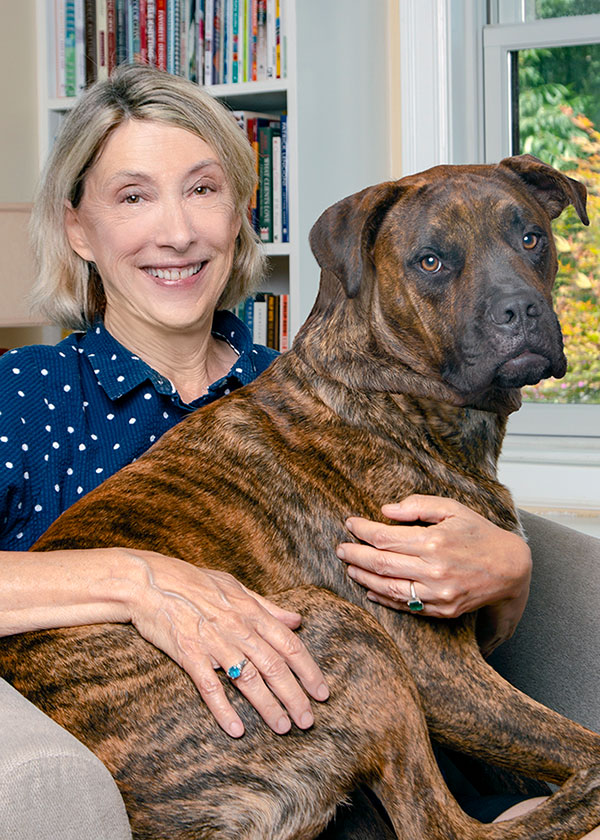
Nancy Teague, the founder of Putnam Service Dogs, is a dedicated advocate who embodies the mission of the organization every single day. Alongside the passionate individuals who have joined the cause, she works tirelessly to make a difference in the lives of both people and dogs. With an unwavering commitment to championing service dogs, Nancy understands the transformative power that occurs when a service dog is matched with its recipient, forging a remarkable team.

