A fully trained service dog costs $20,000 to $60,000. The average cost of a service dog from an accredited program falls around $45,000 to $60,000, and that covers roughly two years of feeding, veterinary care, professional training, and follow-up support.
What you are paying for
The number is high because a service dog is two years of skilled work, not a product. Across accredited programs, the cost breaks down into roughly the same categories:
- Acquiring the dog, whether purpose-bred or selected from rescue, plus intake veterinary care, spay or neuter, and vaccinations
- Two years of food, routine veterinary care, preventatives, and equipment
- Housing and daily care during training
- Professional training, which is the largest share by far
- Team training, where the dog and their person learn to work together to become an effective team
- Follow-up support for the life of the partnership
At Putnam Service Dogs, that means a dog carefully selected from a rescue partner, multiple dogs living with volunteer puppy raisers or with our Ace Retrieve Trainer, four dogs living at our residential center, and multiple day sessions with their person before the dog goes home.
On average, it takes 4-6 months for one of our new service dog teams to bond, learn to communicate, and for the recipient to become an excellent dog handler so the service dog team can pass The Public Access Test. At that point, the dog begins to wear our Service Dog vest rather than our In Training vest.
How much does it cost to train a service dog?
Training is most of the total, usually $15,000 to $30,000, because a task-trained service dog takes about two years of professional training. Service dog trainers are the most specialized trainers in the field, and their rates are generally $100 to $175 an hour. We invest an average of 2,000 hours in every dog we place, and most of those hours go where people don’t expect. A service dog has to do its job in a grocery store, an airport, a hospital waiting room, a building it has never been in, and on a day its person is struggling. That kind of reliability can’t be drilled into a dog quickly. It is built one ordinary errand at a time, which is why we train only four dogs at a time. The long version is here: what it really takes to train a service dog.
Where a dog is raised also affects the cost. Our dogs live in homes with volunteer puppy raisers or with our Rutgers University club until they move to our residential training center, where we train four at a time. Puppy raisers support early development, including basic obedience and socialization, under our trainers’ guidance. Formal training happens at the center. We build the program around what each dog needs, not around how fast we can graduate dogs.
Every service dog school has dogs that turn out not to be suited to the work. That’s true whether a school breeds its own dogs to try to produce the ideal service dog or carefully selects the dogs it trains, as we do. Across the industry, 40 to 50 percent of dogs are released before graduation. Until a promising dog has been in active service dog training for a while, there’s no way to know whether it will make it. The work asks a lot of a dog, and some show us they’re better suited to another path. What it costs to train those dogs is part of what it costs to place every dog who graduates.
Running a service dog school also carries administrative costs: insurance, administrative staff, fundraising, data management software, bookkeeping, and CPA fees. These costs keep the school running, and they’re part of what it costs to place a service dog. Charity Navigator and the BBB Wise Giving Alliance both review how much of a charity’s spending goes to its programs compared with administration and fundraising. Putnam Service Dogs holds a 4-star Charity Navigator rating and BBB Wise Giving Alliance accreditation. See our financials.
Does the cost change depending on the type of service dog?
Less than people expect. A task-trained dog costs $20,000 to $60,000 regardless of the tasks, because the training time is similar. What changes is how easy the dog is to find and who trains that specialty.
- PTSD service dogs for veterans: $20,000 to $50,000. Widely available through nonprofit programs, often at no cost to the veteran.
- Mobility assistance dogs: $40,000 to $60,000. Fewer dogs qualify because the work requires a specific size, build, and skill set.
- Hearing alert dogs: $20,000 to $50,000, are among the more available specialties through nonprofits.
- Seizure alert and diabetic alert dogs: often at the top of the range or above it. Alert work is a narrower skill and fewer programs train it.
- Psychiatric service dogs for anxiety, depression, or autism: $20,000 to $50,000 through a program. Note that an emotional support animal is different under the law and requires no task training, which is why the prices aren’t comparable.
Putnam Service Dogs trains for physical disabilities other than blindness, mobility assistance, hearing alert, and PTSD in veterans. We do not train seizure alert, diabetic alert, hypoallergenic, emotional support, or psychiatric service dogs for people who are not veterans.
If that is what you are looking for, the Assistance Dogs International directory lists accredited programs by specialty, or email info@putnamservicedogs.org and we will point you somewhere useful.
What a service dog costs after the dog comes home
The dog is not the last expense. Feeding and caring for a working dog runs $1,500 or more a year, and that number holds no matter where the dog came from. Grooming, supplies, and replacement equipment sit on top of it.
Insurance does not cover any of it, and neither does Medicare. The VA does not pay for the dog or the training, though veterans with a VA-recognized service dog may be eligible for veterinary care and equipment benefits.
Why some people pay nothing for a service dog
The Board of Directors of each service dog school sets the school’s Mission and policies. We believe our dogs should be free to their recipient as the people we help are already leading a very challenging life. They frequently have high medical bills, and are not high earners because of their disability(s). We assess each application to see if they will benefit from receiving one of our dogs, and if they can competently and humanely care for the dog. Competently means can they truly afford the costs of maintaining and caring for the dog. Humanely means will the dog be safe, kept in clean quarters, adequately exercised, taken out safely to eliminate as often as is needed, etc.
What if you buy privately or train your own dog?
The Americans with Disabilities Act and State Service Dog Laws do not require that you get a service dog only from a service dog school. You can train a dog yourself, but it takes a lot of time, effort, and expense, and you’ll need great trainers to guide you.
Buying or adopting your own dog and then finding a school to train it is generally not an option. Most schools don’t have the resources to train dogs they haven’t bred or selected. Given that service dog schools have a release dog rate of 40-50%, and they know what traits to breed for or seek in adopted pups, the odds of you buying/adopting a dog that can be a service dog are realistically less than 50%.
If you have a dog in your household, most service dog schools won’t consider you as a potential recipient. There’s nothing more distracting than another dog to a dog. Since schools are overwhelmed with applications, they don’t need to place one of their rare, valuable dogs in a situation where it wouldn’t do well.
Some breeders will tell you their dogs are great candidates for service dogs. They’re not actually training and graduating service dogs. They’re breeding dogs. Unless they have statistics to back it up, tread carefully. You may end up with a pet dog rather than a sought-after service dog, and then you have a distraction in your household for another dog.
Then there’s the challenge of finding dog trainers who can guide you on your path to training your pup to be a service dog. Great pet dog trainers without service dog training experience may lack an understanding of key issues and the skills and experience needed in their training repertoire.
Where service dogs come from
Some programs breed their own dogs, selecting breeders for their temperament, size, health, etc. . Others, including us, select from rescue. Either way the cost is driven by the same thing: most service dog schools graduate about 50 percent of the dogs they start. Every program pays to raise and train dogs who turn out not to be suited to the work, and that is built into the price of the ones who are.
Our dogs come from rescue partners, and we assess them carefully. We assess up to 20 dogs to pick one we’ll adopt. Sometimes our Head Trainer comes back from a scouting trip empty-handed as she didn’t see any promising dogs that day. We don’t take dogs people bring us, and we cannot train a dog already living in someone’s home.
We choose a pup for a specific combination of temperament, focus, confidence, and consistency, then evaluate them continually as they grow, because a dog can develop in ways nobody could predict at twelve weeks. Dogs that show they are not suited to the work are released from the program and adopted as pets. We adopt to people with disabilities so the dog can help as their ESA (emotional support animal).
If you are wondering whether your own dog could do this work, we wrote about what makes a dog a candidate. It is a narrower set than most people expect.
Where the money comes from
Donors make this possible through one-time and monthly gifts, along with grants, sponsors, events like our Funminster Dog Show and annual golf tournament, and campaigns including National Service Dog Month, Giving Tuesday, and year-end giving.
We publish our annual reports and IRS 990s so you can check the numbers yourself. We hold a 4-star Charity Navigator rating, BBB Wise Giving Alliance accreditation, and a Candid Seal of Transparency. We also publish what our dogs change for the people they work with.
Every dog we have placed was paid for by someone who decided a person’s wealth and income shouldn’t decide this. You make this possible.
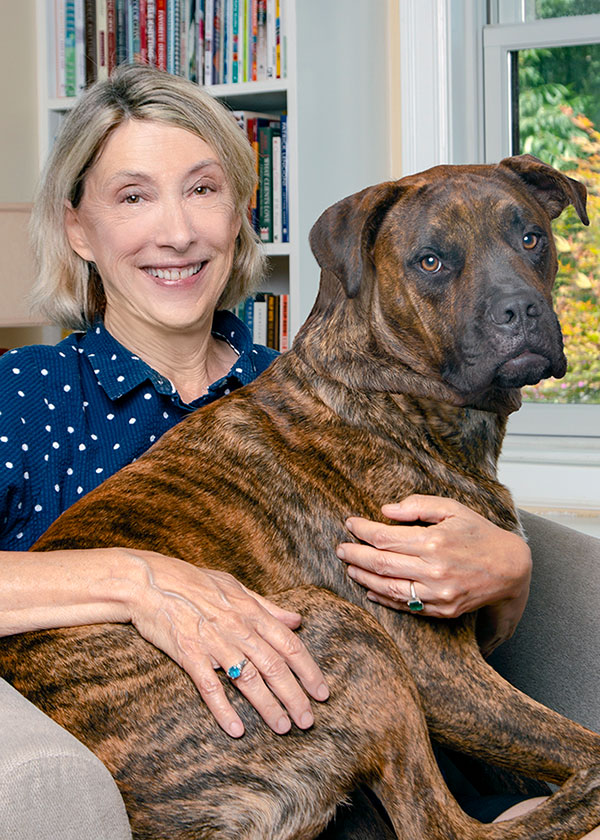
Nancy Teague, the founder of Putnam Service Dogs, is a dedicated advocate who embodies the mission of the organization every single day. Alongside the passionate individuals who have joined the cause, she works tirelessly to make a difference in the lives of both people and dogs. With an unwavering commitment to championing service dogs, Nancy understands the transformative power that occurs when a service dog is matched with its recipient, forging a remarkable team.