
If you spend any time looking into service dogs, you’ll start to see the same pattern—certain breeds, certain programs, certain expectations about what a service dog “should” look like.
So it’s a fair question to ask:
Can any dog be a service dog?
The honest answer is no. Not every dog has what it takes to do this work.
But where a dog comes from? That’s not what determines their potential.
At Putnam Service Dogs, every dog we train begins the same way—as a rescue. We don’t breed dogs. We don’t source from breeders. We work with dogs who, for one reason or another, found themselves without a clear path forward.
And then we give them one.
Not by assuming they can do the work, but by giving them the opportunity to show us.
What Makes a Service Dog… a Service Dog?
A service dog isn’t defined by how they look. It’s defined by how they live and how they work.
These dogs are trained to perform specific, meaningful tasks for someone with a disability—whether that’s picking up dropped items, providing mobility support, interrupting PTSD episodes, or helping their person move through the world with more confidence and independence.
If you’re curious about the different roles service dogs can play, we break that down further in our guide to the types of service dogs.
You can see this in real life through teams like Kate and Duke, where those daily tasks become something much bigger than training—they become independence.
But none of that starts with commands or cues. It starts with the dog themselves.
Before we ever think about placement, we’re asking a much more important question:
Is this dog truly suited for this kind of life?
Because service work asks a lot of them. It requires a strong work ethic, consistency, resilience, focus, and a deep connection to people.
And not every dog—rescued or otherwise—is built for that.
Why We Train Rescue Dogs, And Only Rescue Dogs
This is where we differ from many other programs, and it’s a choice we’ve made very intentionally.
At Putnam, we train rescue dogs. Only rescue dogs.
Not because it’s easier, but because we want to help rescue dogs, and we believe potential isn’t limited to pedigree.
Over the years, we’ve seen incredible dogs come out of shelters—dogs who are intuitive, steady, and deeply connected to the people around them. Dogs who, when given structure and purpose, step into this work in a way that’s nothing short of remarkable.
That said, this is not about taking in every dog and hoping it works out.
Our process is selective. It has to be.
We’re not just looking for just a “good dog.” We’re looking for the right dog for someone’s life.
How We Know a Dog Is Right
One of the biggest misconceptions is that you can look at a dog and immediately know whether they’ll make a good service dog.
It doesn’t work that way.
We don’t assume a dog can do the work—we give them the opportunity to show us.
Every dog that comes into our program begins with structured, foundational training. Over the course of 2,000+ hours, we’re not just teaching skills—we’re paying close attention to how each dog responds to the world around them.
We’re looking at things like:
- how they handle new environments
- whether they can stay focused with distractions
- how they recover when something startles them
- how naturally they connect with people
- and, most importantly, how consistent they are over time
Because service work isn’t about having a good day. It’s about showing up, every day, in real-life situations that can’t always be predicted.
Some dogs show us they’re ready for that.
Some don’t.
And that’s okay.
Dogs who aren’t the right fit for service work are released from the program and placed into loving homes where they can thrive in a different role. But the dogs who continue forward have demonstrated—through time, training, and consistency—that they can handle what this work requires.
Does Breed Matter?
There’s a reason certain breeds are commonly used in service work. They often have traits that lend themselves well to training.
But breed alone is never a guarantee.
We’ve trained dogs of all different backgrounds—many of them mixed-breed rescues—and what we’ve found is this:
Temperament matters more than anything else.
If you want a deeper look at why this matters, we talk more about it in our perspective on mixed-breed service dogs and why breed is never the deciding factor.
A dog can have the “right” breed on paper and still not be suited for service work. And another dog, with no pedigree to speak of, can rise to the occasion in a way you wouldn’t expect.
That’s why we don’t build our program around breed.
We build it around the individual dog.
From Rescue to Service
Every Putnam service dog starts in a place of uncertainty.
A shelter. A surrender. A situation that didn’t work out. They’re unwanted dogs until we adopt them, which is why we say we lift up their life. Once we adopt them, their care and training are very humane. They’re happy dogs. We champion our dogs.
And from there, they begin a completely different kind of journey—one that’s structured, intentional, and built around the possibility of something more.
They learn how to focus. How to respond. How to support.
And eventually, when the timing is right, they’re matched with a person whose life they will change.
It’s not an overnight transformation. It’s something that’s built over time—through training, through trust, and through a belief that these dogs are capable of more than where they started.
Why This Matters
Choosing to work exclusively with rescue dogs isn’t the easiest path.
It requires more evaluation, more patience, more work to diminish their bad traits and habits and increase their good ones, and a willingness to say “not this one” when it’s the right call.
But it also means we’re giving our dogs a happy life, whether they graduate or are released before graduation, and a second chance at something meaningful—while creating life-changing partnerships for the people we serve.
That’s the balance we care about.
Doing right by the dog. And doing right by the person who will depend on them.
Support a Rescue Dog’s Journey
Every service dog we place begins as a rescue. Every one of them is given the chance to show us what they’re capable of. We give them care attention and guidance to ensure they’ll be successful in whatever path they choose to follow.
With your support, that work continues.
If you believe in second chances, in kind, thoughtful training, and in the kind of partnerships that truly change lives, we invite you to be part of it.
FAQs About Service Dogs and Rescue Dogs
No. Not every dog is suited for service work. Most service dog schools achieve about a 50% graduation rate – whether they breed their dogs trying to produce the perfect service dogs, or carefully select the dogs they train as we do. Being a service dog asks a LOT of a dog – they need to be responsive to their person 24/7, they need to be incredibly well behaved in public, they need to not act like a dog – not sniffing, marking, saying hi to other dogs when they’re working, asking for pets from strangers, etc.
Service dogs need a very specific combination of temperament, focus, confidence, and consistency. At Putnam Service Dogs, we evaluate each pup continually and give them the opportunity to show us their best path.
Some dogs demonstrate they’re ready for that level of responsibility required of service dogs. Others don’t, and are placed into loving homes where they can thrive in a different role.
Yes—and at Putnam Service Dogs, they’re the only dogs we train.
We intentionally work with rescue dogs and evaluate them based on temperament, behavior, and their ability to adapt and learn. Many rescue dogs have the resilience and connection to people that make them exceptional service dogs when given the right structure and training.
It comes down to temperament, not breed.
A qualified service dog needs to be calm in unpredictable environments, able to focus despite distractions, and capable of forming a strong working relationship with their person. They also need to recover quickly from stress and remain consistent over time.
These traits are developed and confirmed through hundreds of hours of training—not assumed from the start.
You don’t know right away—and that’s exactly why the process matters.
At Putnam Service Dogs, each dog goes through more than 2,000 hours of structured training and evaluation. During that time, we observe how they respond to real-world environments, how they handle stress, and how consistently they show up.
We don’t rely on guesswork. We rely on time, training, and patterns.
Some breeds are commonly used in service work, but breed alone doesn’t determine success.
We’ve trained many mixed-breed rescue dogs who have gone on to become exceptional service dogs. What matters most is the individual dog’s temperament, willingness to work, and ability to stay focused and calm in a variety of environments.
Sometimes—but not always.
At Putnam Service Dogs, many of our dogs come from shelters and begin training after being selected for the program. From there, they go through structured training to build the skills and behaviors needed for service work.
What matters most is not when training starts, but whether the dog shows the ability to grow into the role.
Not every dog completes the program, and that’s part of doing this work responsibly.
If a dog shows that service work isn’t the right fit, they are released from the program and placed into a carefully selected, loving home. These dogs still make incredible companions—they’re just not meant for the demands of service work.
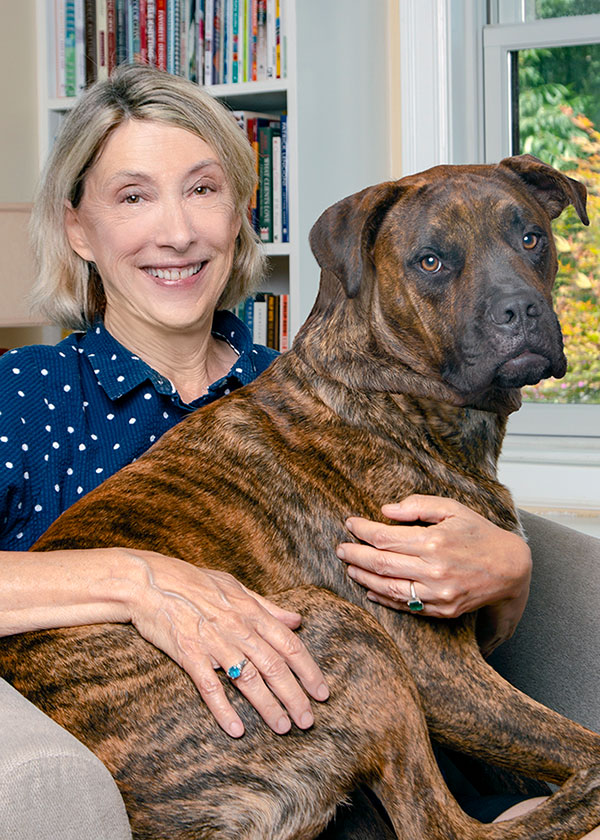
Nancy Teague, the founder of Putnam Service Dogs, is a dedicated advocate who embodies the mission of the organization every single day. Alongside the passionate individuals who have joined the cause, she works tirelessly to make a difference in the lives of both people and dogs. With an unwavering commitment to championing service dogs, Nancy understands the transformative power that occurs when a service dog is matched with its recipient, forging a remarkable team.